Showing posts with label Children's Literature. Show all posts

Tuesday, March 1, 2016

Conversational Reading

BETWEEN THE LINES
PUBLISHED : Monday, 29 February, 2016, 10:00pm
UPDATED : Monday, 29 February, 2016, 10:00pm

How young children learn to enjoy reading 

Nurturing a lifelong love of reading is more about the quality of books than the quantity


Our bookshelf at home has been stocked with Frog and Toad, Ling and Ting, Mouse and Mole and other great character pairings that make up the world of early chapter books for children who are starting to read independently. And yet, for all of her first year in primary school, my daughter preferred to have me read aloud from our picture book collection, whilst she occasionally read those same picture books on her own. I had worried that chapter books, even the easy ones, were too daunting or intimidating for her, or that she simply didn’t enjoy reading. Such concerns turned out to be unwarranted when, halfway through grade two, my daughter skipped the early readers, casually picked up Charlie and the Chocolate Factory and effortlessly read it on her own. And so I was once again reminded that the reading journey does not have a specific route or time schedule; it is full of wandering and detours, much like the journey through childhood.

Ever since the day that I spied my daughter reading Charlie, I’ve been bringing within view and easy reach all the chapter books that had been patiently waiting on the backshelves, including Ramona the Great, The Great Brain, The Enchanted Wood, and The Real Thief. I try not to let my madness for books colour my judgment when choosing books for my children. Perhaps it is precisely due to my madness that I am always careful to share books that are at the appropriate reading and developmental level; I want to make sure that my children have the same opportunity, as I had, to fall in love with the words and stories of these great works.

I always imagine that the highlight of the family reading journey is when a child is five years old. Around that age, he has greater comprehension than his toddler years, and yet still loves to snuggle in your arms and giggle through humour-filled picture books. After attending Diane Frankenstein’s book camp last year, and then bearing witness to my own daughter’s independent reading, it dawned on me that the fun really begins in a child’s primary school years. Sharing ideas and hearing about my daughter’s thoughts about a book have allowed me to gauge her emotional and moral development. It’s so exciting to gain insight into her passions and her fears, and even her character, through our conversations about books.

Nurturing a lifelong love of reading and learning is more about quality of books rather than the quantity of books. A child who speeds through books without reflecting on or discussing them is like a tourist on a nine-cities-in-ten-days whirlwind tour. Diane Frankenstein, a leading educational consultant in children’s literature, provides the tools for parents and teachers to show a child “how to love reading by helping him find great stories, and through questions that jump-start conversations, show him how to mine a story for its treasures.”

Following on the same analogy, such a child is like the traveller who spends time getting to know a city by staying longer, meeting local folk and perhaps finding new adventures on another visit. Like this ideal traveller, a child who has conversations about what he’s reading and who re-reads favourite passages or even an entire book, will return to his own life with fresh perspectives and a deeper understanding of the world around him.

Although I am not looking forward to my daughter’s teenage years, I am confident that being more involved in her reading now, by continuing this habit of talking with her and sharing ideas, will help our parent-child relationship a decade later.


Diane Frankenstein will be back in Hong Kong to host workshops from March 8 through March 12. Please visit www.bringmeabook.org.hk for information and registration.


Tuesday, October 20, 2015

Feng Zikai Book Award Winners

How high-quality picture books can encourage kids to read more

PUBLISHED : Tuesday, 20 October, 2015, 4:00am
UPDATED : Tuesday, 20 October, 2015, 4:00am


Annie Ho life@scmp.com


High-quality children's picture books are the building blocks to a lifelong love of reading. When I disparage commercial products in book form that are based on cartoon characters, my friends protest, insisting their children love storybook versions of their favourite animated TV series.
I counter that recognising and enjoying stories about familiar television characters is not the same as filling one's mind with the artful words and drawings of quality picture books. The difference is that children who are fed a diet of Peppa Pig and Henry Hugglemonster may one day no longer want reading time when they outgrow these characters.
What will keep children wanting to read more are stories that evoke emotions ranging from sheer joy to profound sadness, from belly-aching laughter to fear.
Max, the boy with the furry wolf suit in Where the Wild Things Are, may be just as recognisable as any cartoon character, but this picture book will be etched in the memories of every child who has come across it because of Maurice Sendak's choice narrative, flawless wording and visceral illustrations.
When children are exposed to quality picture books, they will inhale the rich language and complex themes, they will increase their understanding of the world around them, and their lives will be enriched as a result. They will progress from Ludwig Bemelmans' Madeline to Philip Stead's A Sick Day for Amos McGee. Thereafter, when they become independent readers, they will be able to enjoy Charlotte's Web as well as Captain Underpants.
Children's picture books in the English language have a long and revered history, but this is not the case for Chinese-language ones. Thus, the Feng Zikai Chinese Children's Picture Book Award was formed, in order to promote them in the Chinese language and encourage authors, illustrators and publishers to create quality picture books. The award has two components: a biennial award for the best Chinese publications, and an accompanying conference and forum to share and enhance knowledge and understanding of Chinese children's picture books.
The winner of the 4th Feng Zikai Chinese Children's Picture Book Award is Kata Kata Kata, written and illustrated by Bei Lynn. It is joined by four honour books. Interestingly, although all five books have different styles and storylines, I would describe them all as "poignant", touching upon the themes of love and longing. While some of the stories have amusing moments, their humour is approached with tenderness rather than comicality.
Next month, these winning authors and illustrators will be feted at an award ceremony, which will be followed by a two-day forum. The theme of the forum is "Just For Fun! - Humour in Picture Books", and the keynote speaker will be award-winning author and illustrator Jon Klassen.
I cannot think of anyone in a better position to speak about humour than Klassen, whose picture books have been described as subversive and "charmingly wicked". This is Not My Hat won Klassen both the Caldecott Medal in the US and the Kate Greenaway Medal in Great Britain, and he is the first person to win both awards for the same work.
Klassen will be in Hong Kong for an author talk and book signing on November 19. Registration and details at bringmeabook.org.hk For a complete list of Feng Zikai award-winning titles, visit fengzikaibookaward.org
Annie Ho is board chairwoman of Bring Me A Book Hong Kong

Tuesday, August 25, 2015

Transitional Readers

YOUNG READERS CAN WAIT FOR CLASSICS

Parents make a mistake by giving their children classic books to read when they are too young to deal with the subject matter
PUBLISHED : Monday, 24 August, 2015, 10:27pm
UPDATED : Monday, 24 August, 2015, 10:27pm


Harper Lee's Go Set a Watchman has been flying off the shelves of bookshops and libraries around the world, and I wonder whether the copies being sold in Hong Kong should include a label to say that it is not suitable for children under 12. You may think that I'm being facetious, but I have seen a first-grader reading Lee's first book, To Kill a Mockingbird. Clearly not a book he chose for himself, it turned out his parents had encouraged him to read the work because "it is a classic". Had they read the book themselves (which they hadn't), these parents would understand that a story centred on a rape trial is highly inappropriate material for young children, regardless of how strong an independent reader he is.
Our fixation on introducing children to "classics" at a young age may just be another manifestation of hyper-parenting and the need to give children a head start on things including phonics at age two to violin at age three. Or perhaps we've overlooked the value of reading classic literature and are merely focused on "ticking the box" in the same way that we spend our family holiday in California trying to visit as many theme parks as possible.
Children in early primary years are just beginning to appreciate the power of the written language. Now that they are capable of reading for content, it's time to excite them with wondrous words and sentences that help them grasp intentions, moods and context. When reading on their own, children at this stage have progressed beyond Dr Seuss, but are not quite ready for E.B. White and Roald Dahl.
There are some good publications available for transitional readers, the industry's term for children who are graduating from beginning readers to chapter books. They include Passport to Reading, which publishes Ling & Ting, Grace Lin's droll series about a pair of twins; Green Light Readers, which publishes Tim Egan's wacky Dodsworthseries; and Walker Stories, which publishes Mary Murphy's lovely Parrot Parkseries.
My only gripe with the above books is that, although well-written and enjoyable, they are not stories that children are inclined to read more than once. Here is a selection of stories for first- and second-graders that - like those stories from classic literature - can be savoured, remembered and revisited.
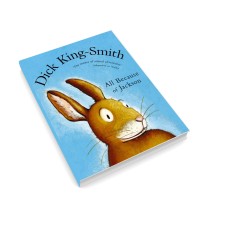
Dick King-Smith writes wonderfully imaginative animal adventures, his best-known being Babe, the Gallant Pig. A shorter but equally entertaining read is All Because of Jackson, a tale about a rabbit who longs to sail around the world.
Jill Tomlinson is the author of The Owl Who Was Not Afraid of the Dark and other stories from her Favourite Animal Tales series. I admire Tomlinson for writing animal tales that have their own distinct flavour and do not follow any formula.
For beautiful stories about resilience and embracing life, Swedish duo Rose Lagercrantz and Eva Eriksson have written and illustrated a series about a little girl named Dani, beginning with the first book, My Happy Life.
Cynthia Rylant's Cobble Street Cousins series is perfect for children who are most likely to grow up loving gentle fare such as Louisa May Alcott's Little Women.
Children who couldn't get enough of Mo Willems' Elephant and Piggiebooks when they were in kindergarten will happily transition to Judith Viorst's Lulu series. Flouting convention, the author speaks directly to the reader in side-splitting "time-outs" between chapters. Similarly, Kate DiCamillo's Bink and Gollie series will induce guffaws from readers who can keep up with the advanced vocabulary contained in the brief but witty text.
Parents who still have lingering worries that their children will be missing out on "the classics" simply must remind themselves that children have their whole lives to read Harper Lee and Charles Dickens, but now is their only time to enjoy Dick King-Smith or Kate DiCamillo.


Annie Ho is board chairwoman of Bring Me a Book Hong Kong bringmeabook.org.hk a non-profit promoting family literacy


Wednesday, March 11, 2015

Reading Fiction

Fiction unlocks a more meaningful world for young readers

PUBLISHED : Tuesday, 10 March, 2015, 6:06am
UPDATED : Tuesday, 10 March, 2015, 6:06am


My love of reading and all that I've gained from it define me as much as my relationship and life experiences. I am confident that my children will also be shaped by the books in their lives and by the rich reading environment in which they are being raised. However, my passion for reading also stems from learning about how reading can change brain development and enrich lives.
Three things I recently learned about reading have further fuelled this passion.
First, bigger vocabulary leads to faster thinking. Second, fiction allows readers to develop the so-called theory of mind. And third, bibliotherapy is not literature.
It is widely acknowledged that children who read for pleasure learn more words than those who do not. Daniel L. Everett, in his study of the Piraha people of the Amazon, took this a step further and examined the implications of a broader vocabulary. He found that the Piraha are able to recognise quantities despite not having any words for numbers or counting in their language. However, they had poor memory for quantities due to their lack of such terms. Words are basically labels. And when you can assign a label to a concept, your brain can better process, retain and retrieve that label. Therefore, it is posited that people with a broader vocabulary think more quickly. And building vocabulary by reading is much more enjoyable than through flash-cards.
Reading fiction has an effect on the brain that is not achieved with reading non-fiction. While a sports fan would gain information by reading a book on baseball history, they would gain more insight from W.P. Kinsella's Shoeless Joe. Fiction allows readers to be transported to the world inhabited by the books and gives a glimpse of environments and situations they have not experienced.
Fiction also offers readers an opportunity to be privy to the thoughts and feelings of others.
A recent study showed that young children who were read stories developed a keener theory of mind than those who weren't. It concluded that "there was substantial overlap in the brain networks used to understand stories and the networks used to navigate interactions with other individuals".
Theory of mind is the capacity of the brain to figure out the intentions and feelings of others; it is different from empathy. Although both help us to identify with another person, the perspective is different. When I see a homeless man and think, "I can imagine how I would feel if I were in his shoes", I am feeling empathy. On the other hand, I have theory of mind when my thought process delves deeper, "I can imagine how it feels to be him in his shoes". The former approach is to consider the plight of the homeless man; the latter approach is to understand his view of the world based on his experiences, fears and dreams.
While theory of mind is a recent discovery for me, my new word of the moment is bibliotherapy - a term I learned from Diane Frankenstein at her recent reading workshops. In the world of children's books, bibliotherapy is a genre created for the purpose of teaching a single subject. Not surprisingly, such books are simplistic in plot and characterisation. Picture books about going to the dentist, starting school and good manners fall into this genre.
In contrast, quality children's literature uses words and illustrations that help readers make sense of the world. The best examples bring many layers to a story, and allow readers to make inferences about multiple themes. It's up to parents to expose children to quality literature so that they can express themselves with a broad vocabulary and developed theory of mind. In doing so, they can help their children grow up to be happy, balanced people.
To better equip parents for this great challenge, Bring Me A Book Hong Kong has launched The Read-Aloud Collection, a new guide to the best English books for children, from babies to teenagers. To download, go to bringmeabook.org.hk
Annie Ho is board chairwoman of Bring Me A Book Hong Kong

Tuesday, October 21, 2014

Wanda Gag

Quirky humour in children's picture books is a nod to the past

PUBLISHED : Monday, 20 October, 2014, 5:06pm
UPDATED : Monday, 20 October, 2014, 5:06pm


What we read to our children changes through the generations, as does how we dress them. When it comes to classic picture books, other than the date of publication, I have firm notions about how they differ from modern works. In my mind, the old classics use soft watercolours and gentle prose to tell stories that warm the heart.
Today's bookshelves are filled with picture books containing laugh-aloud text and eclectic art styles; words often seem to be coming straight from a wacky comedy show, and cartoon illustrations use bright colours to create emotional interpretations of the text.
The epitome of an old classic is Margaret Wise Brown's Goodnight Moon, and many other picture books from that mid-20th century era were created in a similar vein. However, when I went back a little further in time, to before the second world war, I discovered a treasure trove of stories full of magical realism.
In The Story of Ferdinand, written by Munroe Leaf in 1936, Ferdinand the young bull spends his days smelling flowers under his favourite cork tree, impervious to his peers jumping around and butting heads in macho showdowns.
When this pacifist bull is accidentally selected to fight at the important bullfights in Madrid, the reader can't wait to see what happens in the ring. Pages and pages about the lead up to the big fight include a parade of banderilleros and picadores, and the arrival of the matador, before Ferdinand is brought to centre stage.
This is an unconventional story about a bull that doesn't act like a bull, but still stays true to itself. Illustrator Robert Lawson complements the story with uncluttered black-and-white vignettes. It wasn't until my 10th reading that I noticed Lawson had cleverly drawn Ferdinand's cork tree with actual wine corks hanging from it.
Marjorie Flack's The Story about Ping was published even earlier. Ping is a duck who lives on his master's houseboat on the Yangtze River.
One day, Ping decides to run away rather than face getting a light spank on the bottom for being the last one home. But he is captured by a fisherman and narrowly escapes becoming a meal for the fisherman's family. Flack uses many quirky details to depict life in China, and to suggest to her readers that it's better to accept an unpleasant consequence rather than try to avoid it.
Finally, we come to Wanda Gág and her idiosyncratic style of marrying strange storylines with surreal cartooning. Her best-known work, Millions of Cats, has the honour of being the oldest American picture book still in print today.
Published in 1928, it tells the story of a man who goes to get his wife a cat but comes back with "hundreds of cats, thousands of cats, millions and billions and trillions of cats".
With a subtle lesson that humility can outlast pride, Gag introduces a bizarre solution to the problem of having too many cats. I am equally captivated by her other stories: The Funny Thing, about a creature that likes to eat dolls, and Nothing At All, about an invisible dog.
Just when the plot becomes stranger than strange, Gag finds a way to end her stories on a sincerely wholesome "happily ever after" note.
My children have been fed a steady diet of Sandra Boynton, Julia Donaldson and Jon Klassen, so I was curious to see how they would react to these oldies. They enjoy the stories, but tell me they prefer Madeline.
I am delighted to see that their first choice is also an oldie, written by Ludwig Bemelmans in 1939. Just as sartorial styles are cyclical, I wonder whether today's trend of quirky humour in picture books is merely an eye toward a distant past.

Annie Ho is board chair of Bring Me A Book Hong Kong, a non-profit organisation advocating for family literacy by facilitating easy access to quality children's books and empowering parents and educators to read aloud with children for future success in school and life.  bringmeabook.org.hk

Tuesday, July 1, 2014

Book Series for Beginning Readers

Between the lines: The joy of book series

PUBLISHED : Tuesday, 01 July, 2014, 9:41am
UPDATED : Tuesday, 01 July, 2014, 9:41am


I am an advocate for parent-child reading, so my children are in the habit of bringing books to grown-ups for them to read out loud. In the past year, my eldest daughter has started to take books from our bookshelf and read the words silently to herself.
And then one day, I heard her reading Maurice Sendak's One Was Johnny to her younger sister. The sight warmed my heart: she held her sister on her little lap the same way I hold them when I read to them. Only then did I discover that she reads quite well on her own.
Her strong reading skills make school life a little easier. For example, rather than trying to memorise the letters comprising a vocabulary word, she is aware of words that don't quite look right when spelled incorrectly. Solving maths questions don't confuse her because she is able to pick out the needed hints to determine what is required.
To prepare her for Grade One in September, our reading strategy has evolved into book series. I will read aloud the first chapter, to introduce the characters and give them life through animated reading using different voices. Then I leave the rest of the chapters and other books in the series for my daughter to read at her leisure. Book series are helpful tools for developing literacy skills because they often use repeated vocabulary words.
My daughter has happily graduated from Mo Willems' Elephant & Piggieseries of short, repetitive sentences accompanied by wildly funny illustrations. I have devoted so much column space to Willems in the past few years, that I have nothing to add except: if you have a child between the ages of three and six, you must pick up any one of the almost two dozen books in the series. These are exponentially more enjoyable than "The cat sits on a mat" types of first readers' books.
For beginning readers, reading well is more important than reading extensively. This summer, I hope my daughter will read over and over the two series that we are enjoying.
E.H. Minarik's Little Bear series has happy pastoral stories with illustrations by Maurice Sendak. The first four books in the series each contain four short stories. Although each is a self-contained tale, there is continuity in that a later story may make reference to an event from an earlier story. The fifth and final book, published a decade after the earlier books, is one short finale about how a kiss for Little Bear results in the marriage of two skunks.
The book set which I have is the bilingual edition from Taiwan publisher Hsin Yi. The illustrations are accompanied by Chinese text, with the original English at the back of each book. Each book also comes with a bilingual CD.
Available from the same publisher in the same format is the equally pastoralFrog and Toad series by Arnold Lobel. While the Little Bear stories encompass a wide variety of family and friends, Frog and Toad stories centre on the friendship of the two main characters, with a larger dose of humour. Frog and Toad embark on a number of adventures that are silly and delightful.
Both Little Bear and Frog and Toad are quality children's picture books that also happen to serve as appropriate material for beginning readers. This is different from books made specifically for new readers. Books for new readers generally use large fonts to display sight words, and they tend to be created by educators rather than authors and illustrators.
The above two series also expose readers to different forms of writing as natural enhancements of the stories. For example, in Your Friend, Little Bear, when Little Bear writes a letter to his new friend Emily, readers can become better acquainted with letter-writing, with its specific punctuation and indentation. In A List, a Frog and Toad book, the first illustration in the story shows Toad's "list of things to do today". As the story progresses, the text of the story presents handwritten words that are crossed out, in order to show completed tasks.
The aim with book series such as Little Bear and Frog and Toad is that by the end of summer, my daughter will confidently master this familiar material. This will give her a better foundation than hesitantly muddling through dozens of chapter books that are only read once.
Annie Ho is board chairwoman of the non-profit organisation Bring Me a Book Hong Kong bringmeabook.org.hk dedicated to improving children's literacy by reading aloud to them

Wednesday, May 21, 2014

Leonard Marcus

Between the lines: children's book critic Leonard Marcus to visit city

PUBLISHED : Tuesday, 20 May, 2014, 9:39am
UPDATED : Tuesday, 20 May, 2014, 9:39am


Leonard Marcus is a living encyclopedia of children's literature who shares his knowledge through the many books that he has written, analysing the authors and artists who have created some of the genre's greatest works. He has reviewed children's books for The Washington Post and The New York Times, judged multiple book awards and curated exhibitions.
In honour of the 50th anniversary ofThe Phantom Tollbooth, Marcus created an annotated edition with insights from author Norton Juster as well as Marcus himself. In my recent conversation with Marcus, he described The Phantom Tollbooth as "the Alice in Wonderland of our time - a book of amazing verbal inventiveness and a work of the most playful kind of philosophical reflection". The Annotated Phantom Tollbooth, packed with so much commentary, greatly amplifies the experience of reading one of the greatest children's books of the past half a century, and one of my childhood favourites.
Marcus says "in a classic children's book, you will typically find a character at its centre with whom children can form a strong and immediate emotional connection. You will also find the art and storytelling are well matched to each other and to a child's comprehension."
He will explore some of those emotional connections developed in early childhood (between child and family, child and friends, child and self) in a talk, "Children's Books and the Ladder of Years", which he will present next month in Hong Kong. I will attend with plenty of paper and ink, as I expect to be busy scribbling recommended children's book titles, as well as gaining a fuller understanding of books that I've already read.
Another talk is titled "What Makes a Great Picture Book Great?" According to Marcus, famed children's book author Maurice Sendak built on his vast knowledge of the history of illustration to create the magical worlds of his books.
Marcus advises says it's important for budding picture book creators to immerse themselves in the best picture books of the past.
"They should concentrate on learning their craft and always ask themselves, 'What story do I want to tell?' Success usually follows from hard work that is rooted in a deeply personal vision."
Marcus believes that "an essential qualification for any children's book writer or illustrator is a vivid emotional memory of childhood, that is, the ability to recall what it felt like to be a child".
Magic results when picture book creators transform those early memories into stories and images to which readers can universally relate.
Annie Ho is board chairwoman of Bring Me a Book Hong Kong, a nonprofit organisation dedicated to improving children's literacy by reading aloud to them. Visit breingmeabook.org.hk

Wednesday, December 4, 2013

Christmas Books

Between the lines: Christmas stories can't come soon enough for some

PUBLISHED : Monday, 02 December, 2013, 9:17pm
UPDATED : Monday, 02 December, 2013, 9:18pm


Our Christmas tree has already been delivered and decorated. While many bemoan shopping malls for starting the festive season earlier each year, I like hearing holiday tunes and seeing Nativity scenes and Santa displays for as long as possible.

Here is a selection of Christmas stories for children. We got a head start in our home, and have been reading some of them since Thanksgiving, along with singing Christmas carols since Halloween.
Raymond Briggs' The Snowman is a classic tale about a snowman that comes to life and visits the home of the boy who created him. It is an easy book to "read" because it is wordless. Briggs tenderly conveys the emotions of the characters through his poignant illustrations and an ending that is open for interpretation.
Children who are knowledgeable about their nursery tales will be captivated by The Jolly Postman by Janet and Allan Ahlberg. The postman delivers a variety of mail to well-known characters.
The picture book contains pages designed to look like stamped, addressed envelopes, with a bound-in pocket at the back, each containing a detachable piece of mail inside.
For the Three Bears, the postman delivers an apology letter from Goldilocks, in a little girl's handwriting complete with spelling mistakes. For Cinderella, there is a cover letter from her publisher about the first draft of her biography. The letter is typed like a business letter, and there is a mini-book telling the story of Cinderella.
The Ahlbergs' The Jolly Christmas Postman continues the interactive fun with holiday letters and gifts for a new coterie of nursery tale characters, including "Mr H. Dumpty".
Oscar-winner Emma Thompson tried her hand at writing a new story based on her beloved Beatrix Potter character Peter Rabbit, and her resulting TheFurther Tale of Peter Rabbit became a bestseller.
She has followed up with the newly published The Christmas Tale of Peter Rabbit. The story is inspired by a real turkey named William whom Thompson met on Beatrix Potter's farm in Britain's Lake District. The book includes a CD with a recording of the story read by Thompson.
Christmas Stories is a collection of four original stories by Michael Morpurgo, one of Britain's best-loved writers. Each of the master storyteller's tales is accompanied by illustrations by a renowned illustrator.
Morpurgo has written more than 100 stories for children and young adults. They are usually set in the mid-20th century, with children who grow up around animals and rural scenery.
This old-fashioned setting allows him to explore timeless values, which he executes superbly in Christmas Stories. The writing is simple and direct, but the messages contained in these stories are enchanting and philosophical.
Charles Dickens' 1843 novella A Christmas Carol can be enjoyed year after year. A popular edition is the final volume in the Charles Dickens collection at the Everyman's Library, which has classic illustrations by Arthur Rackham. This charming volume contains four other Victorian Christmas tales from Dickens, and makes a beautiful keepsake.
Another well-loved edition of A Christmas Carol is the one with some richly emotional illustrations by contemporary artist P.J. Lynch.
Lynch is best known for his award-winning illustrations of another festive best-seller, The Christmas Miracle of Jonathan Toomey by Susan Wojciechowski.
Annie Ho is the board chairwoman of Bring Me a Book Hong Kong, a non-profit organisation dedicated to improving children's literacy by reading aloud to them bringmeabook.org.hk

Saturday, November 10, 2012

Richard Scarry: Best Storybook Ever, Busy Busy Town


Between the Lines: Richard Scarry's Busy, Busy Town


Sunday, 14 October, 2012, 12:00am


When my daughter was just a few months old, my father-in-law bought Richard Scarry's Busy, Busy Town to read to her because he had read it to my husband when he was young. My husband fondly remembers Sergeant Murphy, the police-officer dog, as his favourite Scarry character.
Grandpa loved to flip through this action-packed book with his granddaughter on his lap. There was always something new to discover at each sitting. Many months later, my daughter found her own favourite character, Lowly.
She still didn't enunciate well at that time, so outsiders could not understand that she was referring to Busy Town's friendly worm whenever she said "Yo-Yee".
I found it amusing how Lowly the worm stood out on the page. The cats, rabbits, pigs, dogs, and all of the other animals were illustrated in similar shape and size. And among them would be twiglike Lowly, who always wore an alpine hat and a smile.
More recently, my daughter has been musing over the sequential descriptions of Busy Town 's busy activities.
In "At the Post Office", Huckle the cat writes a letter to Grandma, and Scarry proceeds to show the reader how that piece of mail reaches Grandma, who jumps with joy on receiving it. With a preoccupation with all things medical, it's no surprise that my daughter always asks us to re-read "Lowly Goes to the Medical Centre", a thoughtful overview of the different types of medical services a child might encounter.
I recognise Scarry's illustrations, but I don't recall reading them as a child. But it turns out that I owned his Best Story Book Ever.
This was revealed when, this summer in Canada, my parents finally succeeded in getting me to sort through the boxes of personal belongings that I had left with them, after moving to Hong Kong over a decade ago.
There among my childhood books was the original 1968 edition of Best Story Book Ever. I flipped through this comprehensive collection of stories, and the memories came flooding back.
Revisiting Best Story Book Ever as a parent I am amazed that it contains what seems like the entire curriculum for kindergarten. In this collection, are two-page spreads on a variety of subjects, such as shapes, numbers, musical instruments and occupations.
Scarry (1919-1994) created thousands of illustrations and accompanied them with educational narratives. Each item in an illustrated scene is usually named, giving readers a wonderful opportunity to learn some new vocabulary.
With Scarry as a partner, parents can help children to recognise and name many of the things in our everyday world.

Annie Ho is board chairperson of Bring Me A Book Hong Kongbringmeabook.org.hk

Monday, October 22, 2012

Books that deal with sibling rivalry - Chloe Instead; Best Friends for Frances


Dealing with sibling rivalry


Sunday, 21 October, 2012, 12:00am