Showing posts with label Fiction. Show all posts

Tuesday, October 24, 2017

Christmas Novels for Youth (Ages 10+)


I just ordered a bunch of books for December reading and just can't wait another minute to tell you about them. Never mind that Halloween hasn't even arrived yet, or that I have a hundred things on my To-Do List...

This is just a book list, please click the book cover to get more information from Amazon. No book review, because almost all of them are hot off the press.

I know these may tend to lean heavier on romance, but hey, it's Christmas and no one wants to write a dystopian Christmas story.

(Click HERE for my list of Christmas-themed picture books for children ages 3+)


My True Love Gave to Me: Twelve Holiday Stories edited by Stephanie Perkins

Anthology with contributions by two of my favorite authors in the young adult field: Rainbow Rowell and Matt de la Peña.


Father Christmas and Me by Matt Haig

The first book A Boy Called Christmas was a bestseller translated into over 25 languages, and it was followed by The Girl Who Saved Christmas. This third title has all the makings of an unforgettable adventure: The adopted human child of Father Christmas dealing with the challenges of Elf School faces her biggest challenge when a jealous Easter Bunny tries to destroy Christmas.


The Afterlife of Holly Chase (by Cynthia Hand)

A retelling of A Christmas Carol may not hook everyone, but who can resist a tale with a twist: Teenager Holly gets a visit in the same way as Scrooge in the Charles Dickens classic. But instead of repenting, she remains selfish and spoiled and then... dies! The suspense of this mere plot summary is already killing me. Can't wait to read it.


Nutcracked (by Susan Adrian)

As if the Nutcracker ballet isn't fantastical enough, the author has added one more layer to the timeless tale: A girl (Georgie) who dances the part of a girl (Clara) who falls into a fantasy world, also finds her own real and fantasy world becoming blurred.


Top Elf by Caleb Huett

For those who love a good laugh, how can you not guffaw when reading about Santa's eldest son, whose first name is... Klaus.


The 12 Dares of Christa by Marissa Burt

There are people who just absolutely love Christmas, and I'm one of them. So I can feel the pain of the "holiday junkie" girl in this story, who is so very *not* looking forward to her mother's plans to take her to Europe for her first holiday away from home.


The Twelve Days of Dash & Lily by Rachel Cohn & David Levithan

A holiday romance to follow bestseller Dash & Lily's Book of Dares (a cute New York story about a romance that resulted from a red notebook and the scavenger hunt that ensues).


Let It Snow by John Green, Maureen Johnson, Lauren Miracle

Three interconnected stories from three bestselling authors. Enough said.

Tuesday, August 25, 2015

Transitional Readers

YOUNG READERS CAN WAIT FOR CLASSICS

Parents make a mistake by giving their children classic books to read when they are too young to deal with the subject matter
PUBLISHED : Monday, 24 August, 2015, 10:27pm
UPDATED : Monday, 24 August, 2015, 10:27pm


Harper Lee's Go Set a Watchman has been flying off the shelves of bookshops and libraries around the world, and I wonder whether the copies being sold in Hong Kong should include a label to say that it is not suitable for children under 12. You may think that I'm being facetious, but I have seen a first-grader reading Lee's first book, To Kill a Mockingbird. Clearly not a book he chose for himself, it turned out his parents had encouraged him to read the work because "it is a classic". Had they read the book themselves (which they hadn't), these parents would understand that a story centred on a rape trial is highly inappropriate material for young children, regardless of how strong an independent reader he is.
Our fixation on introducing children to "classics" at a young age may just be another manifestation of hyper-parenting and the need to give children a head start on things including phonics at age two to violin at age three. Or perhaps we've overlooked the value of reading classic literature and are merely focused on "ticking the box" in the same way that we spend our family holiday in California trying to visit as many theme parks as possible.
Children in early primary years are just beginning to appreciate the power of the written language. Now that they are capable of reading for content, it's time to excite them with wondrous words and sentences that help them grasp intentions, moods and context. When reading on their own, children at this stage have progressed beyond Dr Seuss, but are not quite ready for E.B. White and Roald Dahl.
There are some good publications available for transitional readers, the industry's term for children who are graduating from beginning readers to chapter books. They include Passport to Reading, which publishes Ling & Ting, Grace Lin's droll series about a pair of twins; Green Light Readers, which publishes Tim Egan's wacky Dodsworthseries; and Walker Stories, which publishes Mary Murphy's lovely Parrot Parkseries.
My only gripe with the above books is that, although well-written and enjoyable, they are not stories that children are inclined to read more than once. Here is a selection of stories for first- and second-graders that - like those stories from classic literature - can be savoured, remembered and revisited.
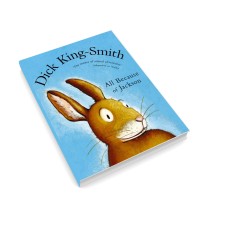
Dick King-Smith writes wonderfully imaginative animal adventures, his best-known being Babe, the Gallant Pig. A shorter but equally entertaining read is All Because of Jackson, a tale about a rabbit who longs to sail around the world.
Jill Tomlinson is the author of The Owl Who Was Not Afraid of the Dark and other stories from her Favourite Animal Tales series. I admire Tomlinson for writing animal tales that have their own distinct flavour and do not follow any formula.
For beautiful stories about resilience and embracing life, Swedish duo Rose Lagercrantz and Eva Eriksson have written and illustrated a series about a little girl named Dani, beginning with the first book, My Happy Life.
Cynthia Rylant's Cobble Street Cousins series is perfect for children who are most likely to grow up loving gentle fare such as Louisa May Alcott's Little Women.
Children who couldn't get enough of Mo Willems' Elephant and Piggiebooks when they were in kindergarten will happily transition to Judith Viorst's Lulu series. Flouting convention, the author speaks directly to the reader in side-splitting "time-outs" between chapters. Similarly, Kate DiCamillo's Bink and Gollie series will induce guffaws from readers who can keep up with the advanced vocabulary contained in the brief but witty text.
Parents who still have lingering worries that their children will be missing out on "the classics" simply must remind themselves that children have their whole lives to read Harper Lee and Charles Dickens, but now is their only time to enjoy Dick King-Smith or Kate DiCamillo.


Annie Ho is board chairwoman of Bring Me a Book Hong Kong bringmeabook.org.hk a non-profit promoting family literacy


Tuesday, December 16, 2014

Diane Frankenstein

Discussing books with children improves their creative writing skills

PUBLISHED : Monday, 15 December, 2014, 5:40pm
UPDATED : Monday, 15 December, 2014, 5:40pm


"Why is Goodnight Moon such a big deal?" my friend asked me. The classic story by Margaret Wise Brown doesn't seem that notable on first glance: a slightly off-putting colour scheme depicting a story without any exciting plotlines or humorous developments.
I urged her and her young child to give the picture book another try, and pointed out a few things to take note of.
The same scene in the bedroom repeats itself through the story, but illustrator Clement Hurd shows subtle changes with each successive image: the lighting, the little rabbit initially on top of the covers and later snuggled under them, and the unassuming mouse.
The verses in the first part of the book have a sing-song quality; the latter part is devoted to the rabbit's special bedtime ritual of wishing a good night to his surroundings.
A quality picture book can be reread and enjoyed many times over, and I can't think of a better example than Goodnight Moon. My four-year-old daughter is still at that stage of discovering new favourites and never tires of hearing them again and again.
But her six year-old sister is now reading on her own, and rarely returns to the same book.
I assumed the natural progression would be for older children to continue their reading on their own, with the added bonus of parents who continue to read aloud a shared story together.
Then I learned of Diane Frankenstein. Through her bestselling book, Reading Together, Frankenstein shows that when children start reading independently, parents need to become more, not less, involved.
A while back, another friend had lamented that her 11-year-old son had poor writing skills, and took great effort to complete book reports and creative writing essays that demonstrated critical thinking (or any kind of thinking, she had joked).
I had given her my canned advice, "Your son needs to read more. The more he reads, the better a writer he will become." When my friend replied that her son has been reading voraciously since grade one, I was stumped.
Looking through Reading Together, I am beginning to understand that children need to talk about the books they read. "Showing children they have something to say about the books they read helps them engage and connect with a story - children who talk about stories understand the stories better," Frankenstein says.
A child who is reading independently needs guidance as much as one being read to.
Frankenstein's long career as an education consultant has enabled parents to "help their children get more out of the books they read".
When parents have conversations with their children about the stories they are reading, they are helping them develop theory of mind, that is, the ability to understand that others have separate thoughts and feelings.
Such an understanding leads to empathy, imagination and creativity. Children cannot create fantastical pieces of writing unless they can delve into their story's characters.
Frankenstein is returning to Hong Kong to present a "book camp" for parents of children aged six to 12 years.
This will be the first local event in which she provides discussions about chapter books and the conversations that parents and children can have.
She will cover topics such as bullying, empathy, adversity, peer pressure, popularity, self-esteem, motivation and making a difference.
If the question of reading and writing comes up again, my quip will be: "You and your child need to have conversations about what he's reading. The better reader he is, the better writer he will become."
  • Bring Me A Book Hong Kong will host Diane Frankenstein's Book Camp workshops from January 23 to 27. For more information and registration, go to openclass.hk/activity/2458

Annie Ho is board chair of Bring Me A Book Hong Kong bringmeabook.org.hk a non-profit organisation advocating family literacy

Thursday, March 8, 2012

Great Fiction: Julian Barnes, Tim Parks, Ann Patchett

I read two great works of fiction in the past ten days. I just finished the last page of the second novel and have this exhilarating feeling of wonderment. This is what it feels like to be transported into new worlds that are completely unrelated to my own reality.


I have been so busy with my weekly column and running a household that I can't remember the last time I read adult fiction. Both books had been sitting on my bedside table for months. At 10:00 p.m. one night last week, with my husband out of town on a business trip, I wanted to do a little reading before bed. I decided to tackle The Sense of an Ending by Julian Barnes first because of its brevity. Barnes's descriptions were so choice that I started jotting down phrases that I liked. I eventually had to give up because I was spending too much time putting down the book in order to take notes. I understood that enough was enough, and I enjoyed the book without further interruption. The prose and plot were so captivating that I ended up staying up very late to finish the book in one sitting.

Barnes has the spellbinding ability to articulate the sentiments of every person who has ever contemplated life and death and/or reflected on his own mortality. The way Barnes's Tony Webster muddled through life without much self-knowledge and with a large dose of self-delusion and inanity reminded me of the protagonist in Tim Parks's Casa Massimina, one of my favorite books.


The book I just finished moments ago is State of Wonder by Ann Patchett. I had read about 100 pages when I first bought the book half a year ago, but decided to start all over again because of its detailed plot. What attracted me to purchase this book in the first place was that the story had nothing whatsoever to do with my own life. The protagonist is an unmarried half-Indian half-Minnesotan scientist and most of the story takes place in the Amazon. Patchett is a good storyteller and I can visualize a Hollywood movie. I really felt that she was taking her sweet time with the descriptions and the story could have been edited down, but this may be because I had just finished a succinct short story. As a result, I became a little impatient with the extensive depictions of Brazil and the Amazon, and didn't become spellbound until the last few chapters. A great yarn.

Tuesday, July 5, 2011

In My Shopping Bag 2011/07/05

I'd like to share with you some books I bought today:

Le Petit Nicolas (French Edition)
I have the beautiful Phaidon collection of "Nicholas" stories in English, and want a set in the original French for our bookshelf


Bossypants
I love Tina Fey

State of Wonder
I haven't purchased a fiction novel for a very long time, and would like to read something just for pleasure

Friday, October 8, 2010

On Perspective

One of my favorite authors is Alice Munro. (Back in the 1990s, I briefly worked on a case with her son and was more in awe of the fact that he was Alice Munro's son than his reputation as a litigation lawyer.) Her prose is uncomplicated and her stories artfully capture the human condition. Her latest offering is a collection of short stories, (cheekily) titled Too Much Happiness.

Too Much Happiness: Stories

I bought the book earlier this year, purposely choosing it for its short story format because sometimes it is weeks before I have time to continue where I left off. As with all beautiful writing, I found the time to continue and finished the book in the course of three consecutive evenings, in the last evening reading until just before the break of dawn. Like young children's literature, short story fiction is a genre that requires so much precision. The characters in Too Much Happiness are recognizable and relatable, and the vignettes that the writer chooses for developing these characters are genius.

To me, perspective is getting out of the drama of our own lives and daily interactions, in order to appreciate that everyone else has a story too. Two weeks ago, one of the babies in our newborn daughter's room died; my husband and I felt so sad for the parents, whom we had seen making regular visits up to the day before their baby's death. When my husband shared this with his colleague, the colleague made an interesting remark: everyone who works in the finance industry (and complains about his job) should spend one week a year in a hospital.

Alternatively, I suggest you read Alice Munro for similar effect.

Wednesday, September 1, 2010

Losing and Finding

Carrying on from my last post, I wonder if one needs to identify with a story in order to really enjoy it.

The Joy Luck Club

That was certainly the case with The Joy Luck Club. I remember reading it and being engrossed in the story, laughing aloud at descriptions of life with Chinese immigrant parents. I also remember excitedly sharing favorite parts of the story with my best friend from Chinese school, with both of us declaring in unison that I was Waverley. (I spent eight years of Saturday mornings at Chinese school. Very grateful now for my Chinese language skills, but back then, resentful because my non-Chinese friends in my earlier years were enjoying Laugh-Olympics and other cartoons from the Saturday morning line-up, and in my teens, they got to sleep in.)

Life of Pi

There is no part of Life of Pi that I can readily identify with (but then, who could relate to such an fanciful story?), and yet it is one of the best books I have ever read. My experience may have been heightened by the fact that I was on a lazy beach resort holiday in either Phuket or Bali. The storytelling was so captivating, I couldn't put it down. For months afterwards, I was recommending it to anyone who was interested, and yet I wasn't even able to properly describe the plot, let alone the allure. "Just read it!" I kept urging.

A great read is when you find yourself in a book, and can also be when you lose yourself in a book.

Tuesday, August 31, 2010

I'd Rather Read a Cereal Box

When trying to find Captain Corelli's Mandolin a few days ago, I was reminded that I need more bookshelves, because my paperback fiction collection has been pushed to the back of our double-depth shelves.

Or perhaps, one of these days, I will sit down and give some thought to maybe editing my book collection and possibly even parting with a few books. I still have my Canadian Collegiate Dictionary from the late 1980s, even though I've been looking up words online for more than a decade. And I just read in the newspaper that Oxford may be publishing only an online version of its multi-volume Oxford English Dictionary when the new edition is ready in a few years, because it doesn't expect much demand for the printed version.

Bitch Goddess Notebook     Little Children: A Novel

Two books I will part with before my college dictionary: The Bitch Goddess Notebook and Little Children. The first book I bought at the airport many years ago, before I started to buy hardcover only, because the title caught my eye. (Reading a hardcover book compared with its trade paperback version is like having home-delivery food served on my own plates and with proper utensils rather than eating from styrofoam containers and with disposable chopsticks.)

The second book was a gift from a girlfriend; she had bought me half a dozen best-sellers to read when I was pregnant with my daughter. When I went to Amazon.com to add the book cover image to this post, I noticed that Little Children had been made into a film starring Kate Winslet and Jennifer Connelly. I'm bug-eyed.

I don't remember the details of either story or my reading experience, I just know that when I finished reading them, I thought to myself, "Wow, what a waste of my time." I must have found the plot formulaic, felt annoyed by the characters, been unimpressed with the dialogue, or all of the above.

Monday, August 30, 2010

The Book before the Film

The Hitchhiker's Guide to the Galaxy, 25th Anniversary Edition          Corelli's Mandolin: A Novel

This past weekend I read The Hitchhikers Guide to the Galaxy. I was thinking about what to read next, and saw that a UK survey of readers' favorites had listed Captain Corelli's Mandolin in the top 25. The provenance of my copy is memorable. It belonged to a man I sat next to on the plane. He had finished reading it near the end of a long flight, during which we had some polite general conversation, and asked whether I'd like to have the book since he was, in his words, done with it. This happened more than 10 years ago and I remember the incident because I found it so foreign that someone could so easily part with his book.

Being on partial bedrest, I've prescribed myself a list of physical "don'ts", including climbing, reaching on tiptoes and crouching. So I had to ask my husband to climb up to the top of our bookshelf to help me find Corelli's Mandolin. He looked and looked and, insisting that I had no such book, named each title in the vicinity of where this book should be. When he called out Hitchhikers Guide organized under "A" for Adams, I asked for it to be passed down to me. How fun to discover a forgotten book. (My husband patiently continued the search, and found Corelli's Mandolin under "D" for de Bernieres instead of under "B" where I had asked him to look.)

Everything Is Illuminated: A Novel     The Hours (Paperback)     In Cold Blood

As I started to read Hitchhikers Guide (which, by the way, is also listed on that same UK survey), I realized to my dismay that I had already seen the movie a few years back. Dismay because generally I don't like to see the film version before reading the original book. Often times I am inspired to read a book after learning of a soon-to-be-released film version, just so I can read the book first, before watching the film.  Recent examples include: Everything is Illuminated, The Hours and In Cold Blood, all of which I loved both book and film versions.

As expected, I had barely gotten through the first dozen pages of Hitchhikers Guide before I found myself waiting for the part where Arthur Dent is beamed onto a spaceship. I was reading without really savouring the writing, and instead kept anticipating what I knew would be the next "scene". The book was fun and easy to read -- I ended up having to put it down and pick it up again several times over the weekend, and had no problems with starting where I had left off -- but I suspect it would have been more deliciously funny if I didn't know what would be happening next in the story.

Monday, August 23, 2010

Dave and Chris

This past weekend, friends came over for dinner and one of them recognized my complete collection of McSweeney's Quarterly Review.  In addition to very original content, I also enjoy the humorous copyright disclaimers and introductions from guest editors (such as Viggo Mortensen and Judy Blume). 

A Heartbreaking Work of Staggering Genius     

MQR was created by Dave Eggers, one of my favorite writers. The first work I read by him was A Heartbreaking Work of Staggering Genius.  I bought the book because of the title.  It was my first experience with "stream of consciousness" writing and I found it so contemporary and hip.  I wanted him to be the father of my children because I imagine him to be a cool dad who creates a stimulating and fulfilled home environment; our children would be so articulate and brilliant! (I had similar fantasies about Chris Martin after attending a Coldplay show.) 

Let Northern Lights Erase Your Name

Last year, I bought another book because of the title and loved it.  (The word "northern" reminded me of one of my favorite songs from the 1980s, "Life in a Northern Town".)  Imagine my excitement when I learned that Vendela Vida, the author of Let the Northern Lights Erase Your Name, is married to Dave Eggers!  Since then, my fantasy has been revised: my husband and I live in the Bay area and are best friends with the Vida-Eggers family, enjoying great Napa wines and exchanging literary banter.