A book-loving mom's read-aloud journey with her children, with recommendations on children's books and musings about parenting, education and Hong Kong family life.
Showing posts with label school anecdotes. Show all posts
Tuesday, July 5, 2016
Doing Nothing
I feel like we've been on an extended summer break because my two kids have been home with various ailments for the better part of June. As soon as symptoms subsided, they started to tire of staying home. "I'm so bored," they would whine. I replied, "Boredom creates creativity," and left them to their own devices. Lo and behold, they quickly found things to keep themselves entertained, including solving a problem they were having with the lever mechanism of an old toy, and creating the lyrics to an original tune.
Every summer we return to Vancouver to visit my parents. And every June I start surfing the web to check out summer camps and other offerings. But I always manage to resist the urge to actually enrol in any of them. Perhaps I'm simply too lazy to drag my jetlagged body out of bed in order to get them to camp on time (flashback to July 2014 when we missed two out of five classes in one-week of ice-skating lessons that started at 1:00pm), although I would like to believe that I'm making a conscious decision to give them a schedule-free summer.
I spend the entire school year rushing my children through their day with military precision, and the entire household gets antsy when we're running behind schedule, especially at bedtime. It wouldn't be much of a holiday, for the kids as well as for me, if I had them on a schedule through the summer. In Vancouver, we can have breakfast whenever, and for however long, we want.
It's hard not to get caught up in the race to have my children acquire skills from an early age, and to devote hours to hone those skills. By not letting my children try new things in the summer, am I robbing them of the opportunity to discover some hidden talent they may have for Fencing or French, Cooking or Coding?
They have the rest of their lives to learn new sports and other activities. So these early years should be devoted to developing their sense of self. I want to give them time for unfettered play in the backyard (to intimately know that backyard and all its inhabitants), time to meet other kids in a public playground (even though they may never see them again), time to help with chores around the house (how can we teach by example if our kids aren't around us long enough to see the example we're setting?).
Grit, resilience, curiosity, integrity, EQ, AQ... I will do my best to nurture these soft skills in my children, and I'm pretty sure I can do a better job of it when I'm not shouting at them to "Hurry up!"
See my 2012 article recommending books about "Doing Nothing": http://ahwb-hk.blogspot.hk/2012/03/scmp-march-25-2012.html
Reminder to self: "Note every moment spent with my children needs to be educative or productive or a means toward some end." Deep breath. Ohmmmmm.
HAPPY SUMMER!
Wednesday, April 6, 2016
Co-sleeping
Is there a right way to deal with a sleepless child who wants to share mum’s bed?
A Hong Kong mother seeks advice on helping her daughter stay asleep, having discovered from friends a wide variance in how they handle the issue, from indulgence to hiring a child therapist
PUBLISHED : Monday, 28 March, 2016, 4:00am
UPDATED : Monday, 28 March, 2016, 10:36am
The domestic helper who looked after my younger daughter for the past four years left our home six months ago. My daughter appears to be adjusting well because, rather than hire another helper, I have personally stepped in to fill the void.
I know that she is thrilled to have so much of my time and attention. However, something different may be happening subconsciously. I mention this household change because I believe this to be the trigger point for a new occurrence in our home.
Three months ago, my daughter started coming to me when she woke up in the middle of the night. Since then, she has made a regular appearance two or three times a week. Because this has not happened in the past, I find it quite endearing to be pulled out of slumber by the pitter-patter of her little feet as she scrambles to my bedside.
With full knowledge that my daughter has lost her best friend and constant companion, I am sympathetic to her nighttime visits. She doesn’t fall asleep in my bed, so when I’m sufficiently conscious, we return to sleep in her bed, where she is safely lulled back to sleep. In her bed, I doze off while lying on my side, cramped with my back against her bedrail.
Here is where we stand on this arrangement: my daughter prefers to sleep with me. I love to cuddle with her but do not enjoy the sore back and interrupted sleep. My husband firmly believes we need to fix this “problem”.
Turning to my friends for advice, I was surprised to find that many of them accommodate their children’s needs, and some even embraced the opportunity to have this special cuddle time. A number of friends repeated the old adage, “Children grow up so quickly.”
In canvassing my friends’ family sleep habits, I encountered a wide spectrum of scenarios. On one end were friends with giant-sized family beds for parents and children to share every night until the children left for boarding school. On the other end was a friend who was so concerned about his child’s nightly visits that he brought in a child therapist to get to the cause and put a stop the fitful sleep experienced by everyone involved.
In between are the majority of friends who don’t mind the occasional visit but prefer to have children sleeping through the night in their own beds. It seems that the arrangement that each of us chooses is the one that causes the least disruption and ensures the most amount of sleep for the most number of family members.
Our home is well-stocked with books about going to asleep. We have the classics that my daughter loved when she was a toddler: Margaret Wise Brown’s Goodnight Moon and Peggy Rathmann’s Good Night Gorilla. There is my current favourite, Tell Me the Day Backwards by Albert Lamb, and my daughter’s current favourite, The Champion of Staying Awake by Sean Taylor.
We also have the newly acquired The Rabbit Who Wants to Fall Asleep by Swedish behavioural psychologist Carl-Johan Forssen Ehrlin. Specifically created to induce sleep, Forssen Ehrlin spent three years perfecting his innovative technique with the right words to help children relax and drift off to sleep, ideally before even reaching the end of the story. Thousands of parents have attested to this book’s effectiveness.
Now, if only someone could write a good children’s book that would help children to stay asleep.
Annie Ho is board chair of Bring Me A Book Hong Kong (bringmeabook.org.hk), a non-profit organisation advocating for family literacy by facilitating easy access to quality children’s books and empowering parents and educators to read aloud with children for future success in school and life
Tuesday, March 1, 2016
Conversational Reading
BETWEEN THE LINES
PUBLISHED : Monday, 29 February, 2016, 10:00pm
UPDATED : Monday, 29 February, 2016, 10:00pm
How young children learn to enjoy reading
Nurturing a lifelong love of reading is more about the quality of books than the quantity
Annie Ho
life@scmp.com
life@scmp.com
Our
bookshelf at home has been stocked with Frog
and Toad, Ling and Ting, Mouse and
Mole and other great character pairings that make up the world of early
chapter books for children who are starting to read independently. And yet, for
all of her first year in primary school, my daughter preferred to have me read
aloud from our picture book collection, whilst she occasionally read those same
picture books on her own. I had worried that chapter books, even the easy ones,
were too daunting or intimidating for her, or that she simply didn’t enjoy
reading. Such concerns turned out to be unwarranted when, halfway through grade
two, my daughter skipped the early readers, casually picked up Charlie and the Chocolate Factory and
effortlessly read it on her own. And so I was once again reminded that the
reading journey does not have a specific route or time schedule; it is full of
wandering and detours, much like the journey through childhood.
Ever
since the day that I spied my daughter reading Charlie, I’ve been bringing within view and easy reach all the chapter
books that had been patiently waiting on the backshelves, including Ramona the Great, The Great Brain, The
Enchanted Wood, and The Real Thief.
I try not to let my madness for books colour my judgment when choosing books
for my children. Perhaps it is precisely due to my madness that I am always
careful to share books that are at the appropriate reading and developmental level;
I want to make sure that my children have the same opportunity, as I had, to
fall in love with the words and stories of these great works.
I
always imagine that the highlight of the family reading journey is when a child
is five years old. Around that age, he has greater comprehension than his
toddler years, and yet still loves to snuggle in your arms and giggle through
humour-filled picture books. After attending Diane Frankenstein’s book camp
last year, and then bearing witness to my own daughter’s independent reading,
it dawned on me that the fun really begins in a child’s primary school years.
Sharing ideas and hearing about my daughter’s thoughts about a book have
allowed me to gauge her emotional and moral development. It’s so exciting to
gain insight into her passions and her fears, and even her character, through our
conversations about books.
Nurturing
a lifelong love of reading and learning is more about quality of books rather
than the quantity of books. A child who speeds through books without reflecting
on or discussing them is like a tourist on a nine-cities-in-ten-days whirlwind
tour. Diane Frankenstein, a leading educational consultant in children’s
literature, provides the tools for parents and teachers to show a child “how to
love reading by helping him find great stories, and through questions that
jump-start conversations, show him how to mine a story for its treasures.”
Following
on the same analogy, such a child is like the traveller who spends time getting
to know a city by staying longer, meeting local folk and perhaps finding new
adventures on another visit. Like this ideal traveller, a child who has
conversations about what he’s reading and who re-reads favourite passages or
even an entire book, will return to his own life with fresh perspectives and a
deeper understanding of the world around him.
Although
I am not looking forward to my daughter’s teenage years, I am confident that being
more involved in her reading now, by continuing this habit of talking with her
and sharing ideas, will help our parent-child relationship a decade later.
Diane
Frankenstein will be back in Hong Kong to host workshops from March 8 through
March 12. Please visit www.bringmeabook.org.hk
for information and registration.
Tuesday, August 25, 2015
Transitional Readers
YOUNG READERS CAN WAIT FOR CLASSICS
Parents make a mistake by giving their children classic books to read when they are too young to deal with the subject matter
PUBLISHED : Monday, 24 August, 2015, 10:27pm
UPDATED : Monday, 24 August, 2015, 10:27pm
Annie Ho life@scmp.com
Harper Lee's Go Set a Watchman has been flying off the shelves of bookshops and libraries around the world, and I wonder whether the copies being sold in Hong Kong should include a label to say that it is not suitable for children under 12. You may think that I'm being facetious, but I have seen a first-grader reading Lee's first book, To Kill a Mockingbird. Clearly not a book he chose for himself, it turned out his parents had encouraged him to read the work because "it is a classic". Had they read the book themselves (which they hadn't), these parents would understand that a story centred on a rape trial is highly inappropriate material for young children, regardless of how strong an independent reader he is.
Our fixation on introducing children to "classics" at a young age may just be another manifestation of hyper-parenting and the need to give children a head start on things including phonics at age two to violin at age three. Or perhaps we've overlooked the value of reading classic literature and are merely focused on "ticking the box" in the same way that we spend our family holiday in California trying to visit as many theme parks as possible.

Children in early primary years are just beginning to appreciate the power of the written language. Now that they are capable of reading for content, it's time to excite them with wondrous words and sentences that help them grasp intentions, moods and context. When reading on their own, children at this stage have progressed beyond Dr Seuss, but are not quite ready for E.B. White and Roald Dahl.
There are some good publications available for transitional readers, the industry's term for children who are graduating from beginning readers to chapter books. They include Passport to Reading, which publishes Ling & Ting, Grace Lin's droll series about a pair of twins; Green Light Readers, which publishes Tim Egan's wacky Dodsworthseries; and Walker Stories, which publishes Mary Murphy's lovely Parrot Parkseries.

My only gripe with the above books is that, although well-written and enjoyable, they are not stories that children are inclined to read more than once. Here is a selection of stories for first- and second-graders that - like those stories from classic literature - can be savoured, remembered and revisited.
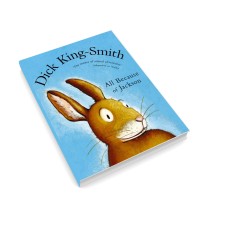
Dick King-Smith writes wonderfully imaginative animal adventures, his best-known being Babe, the Gallant Pig. A shorter but equally entertaining read is All Because of Jackson, a tale about a rabbit who longs to sail around the world.
Jill Tomlinson is the author of The Owl Who Was Not Afraid of the Dark and other stories from her Favourite Animal Tales series. I admire Tomlinson for writing animal tales that have their own distinct flavour and do not follow any formula.
For beautiful stories about resilience and embracing life, Swedish duo Rose Lagercrantz and Eva Eriksson have written and illustrated a series about a little girl named Dani, beginning with the first book, My Happy Life.
Cynthia Rylant's Cobble Street Cousins series is perfect for children who are most likely to grow up loving gentle fare such as Louisa May Alcott's Little Women.

Children who couldn't get enough of Mo Willems' Elephant and Piggiebooks when they were in kindergarten will happily transition to Judith Viorst's Lulu series. Flouting convention, the author speaks directly to the reader in side-splitting "time-outs" between chapters. Similarly, Kate DiCamillo's Bink and Gollie series will induce guffaws from readers who can keep up with the advanced vocabulary contained in the brief but witty text.
Parents who still have lingering worries that their children will be missing out on "the classics" simply must remind themselves that children have their whole lives to read Harper Lee and Charles Dickens, but now is their only time to enjoy Dick King-Smith or Kate DiCamillo.
Annie Ho is board chairwoman of Bring Me a Book Hong Kong bringmeabook.org.hk a non-profit promoting family literacy
This article appeared in the South China Morning Post print edition as Young readers can wait for classics
Wednesday, September 24, 2014
Sustained Silent Reading SSR
COLUMN
PUBLISHED : Tuesday, 23 September, 2014, 10:33am
UPDATED : Tuesday, 23 September, 2014, 10:33am
Sustained silent reading can improve literacy
Annie Holife@scmp.com
My daughter and her kindergarten buddies are adjusting well to Grade One and life in a "big kids' school". They are learning new skills to develop their independence and self-reliance.
The most conspicuous changes from kindergarten are that these children no longer have teachers to remind them to wash their hands before lunch, or to make sure they bring the right exercise books home for homework.
This transition to a new school is daunting for my daughter. I imagine that she misses her kindergarten teachers' warm embrace and sitting on their laps to share stories of recent adventures.
Yet, with new teachers to get to know, new friendships to establish and new routines to master, it's unlikely that she reflects much on the past.
My daughter is fortunate enough to attend a local school where the daily schedule includes three recess breaks, and sustained silent reading.
Also known as free voluntary reading, sustained silent reading at this primary school involves all students reading silently for 20 minutes every day. The only restriction is that students must read English-language books and Chinese-language books on alternate weeks.
The key to sustained silent reading is that students can select their own books, and read them freely without comprehension tests or rewards for reading.
An eminent authority on second language acquisition, Dr Stephen Krashen is an influential advocate for sustained silent reading.
In his recently published Free Voluntary Reading, Krashen set forth his voluminous research on language proficiency, all of which pointed to the finding that more dictation, worksheets and lists to memorise are consistently less effective than the simple activity of reading.
Although my daughter has been exposed to a large volume of books covering many different genres, she has yet to develop strong preferences. I remember one library excursion where she had insisted on borrowing a book titled Robbie and the Alien.
It was not something I would have chosen for her at the time, because it was written with older children in mind. We read a bit of the story aloud after returning home, then she lost interest and the book remained untouched until it was returned to the library.
Of course, there are countless times that a book we overlooked on our bookshelf turned out to be a family favourite after reading it together. Perhaps her inability to make a decision on which book to bring for silent reading comes from having learned that one can't judge a book by its cover.
With the responsibility of book choosing resting on my shoulders, I did what I normally do: I overthought the situation. I wanted to give my daughter a picture book, but I worried that her classmates would bring chapter books.
Then I worried that, if I gave her a chapter book, it would look like I was showing her off as an accomplished reader. Although she is capable of reading a chapter book, it's hard work for a six-year-old to concentrate on pages and pages of text. It is like an adult trying to read Tolstoy or Cervantes on a weekend beach getaway. It's doable, but it's not fun.
What six-year-olds want to read are picture books with thoughtful text presented in a large font, accompanied by appealing illustrations. So my solution was to help set up a classroom library filled with a wide selection of Chinese and English books covering different topics and levels of difficulty.
Formal language instruction aims to teach language skills, and is complemented by a sustained silent reading programme. But developing strong language skills is only a side benefit of sustained silent reading, because its primary goal is to develop a life-long reading habit.
Hong Kong children, with homework and extra-curricular activities filling up their after-school hours, often only have time for informational reading, that is, the type that has been assigned by their teachers. Once educators recognise the immense value of children’s literature, schools can promote literary reading by incorporating daily SSR into its curriculum.
My daughter is revisiting books that I read to her when she was younger. Back then, she only focused on the illustrations. Now she is able to enjoy the wonderful words, too. Bob Graham's April and Esme Tooth Fairies is a timely read as my daughter wiggles her loose front teeth. She has also rediscovered Mac Barnett's Extra Yarn after her grandmother tried to teach her to knit.
Bring Me a Book Hong Kong has thematic guides to the best English and Chinese children's picture books that are perfect for beginning readers to explore on their own. The guides can be accessed for free on its website.
Annie Ho is board chairwoman of Bring Me a Book Hong Kong
This article appeared in the South China Morning Post print edition as Why it helps to read in silence
Tuesday, April 22, 2014
The Easter Story
Between the lines: explaining Easter's message to children
PUBLISHED : Tuesday, 22 April, 2014, 10:45am
UPDATED : Tuesday, 22 April, 2014, 10:45am
Annie Holife@scmp.com
To me, Easter is all about children's games, arts and crafts. This year's activities included making Easter bonnets, egg decorating, and countless egg hunts. My children, on the other hand, are fixated with the Crucifixion. They chat about Jesus dying on the cross, which leads them to sing in unison a song with an upbeat tempo about the Crucifixion. Next thing I know, I overhear them continue with other dead people.
Little sister: "A cross means heaven. Yeye [Grandpa] is in heaven, so Yeye died on the cross."
Big sister: "No, Yeye died in the hospital."
Little sister: "Oh."
This sobering talk makes the overflowing bag full of colourful giant chocolate eggs and bunnies that I have stockpiled in the closet seem somehow sinful and indecent.
Children are fascinated with the Crucifixion because they only contemplate Jesus the man, rather than Jesus the Messiah. Thus they wonder about the physical pain of being nailed to a cross and they try to find answers to why people were so mean to Jesus.
For child-friendly depictions of the gruesome Crucifixion, there are two wonderful books, both titled The Easter Story.
Gennady Spirin's The Easter Story elegantly portrays the events leading up to and following the Crucifixion. Spirin's dignified illustrations are in obvious contrast to Easter picture books about bunnies and eggs.
Brian Wildsmith is an award-winning illustrator whose version of The Easter Story uses vivid metallic colours. The story is adapted for young children, and is further simplified by telling the tale from the perspective of the donkey that carries Jesus through the streets on Palm Sunday.
Wildsmith is one of England's best known children's illustrators. A Christmas Story is a good companion book to The Easter Story. And his new Illustrated Bible Stories will be published later this month.
Ali Thompson, editor of a Sunday school periodical, used an innovative way to explain to kids the significance of Jesus's sacrifice. She asked her children to write on sticky notes things that they have done wrong, and then to stick the notes on themselves. Each time the children placed a sticky note on themselves, Thompson quickly took that sticky note and stuck it on her own body. In this way, she was able to demonstrate how Jesus took on sins.
For a secular celebration of Easter, The Country Bunny and the Little Gold Shoes is a classic story by DuBose Heyward and illustrated by Marjorie Flack. While the overconfident male rabbits expect one of their own to be named Easter Bunny, wise Grandfather Bunny grants the honour to a kind-hearted country rabbit who has grown up to be a hard-working and humble mother of almost two dozen bunnies. I was astonished to learn that this story which encourages girls to grow up and follow their dreams was first published in 1939.
Annie Ho is board chairwoman of Bring Me a Book Hong Kong, a non-profit organisation dedicated to improving children's literacy by reading aloud to them. Visit bringmeabook.org.hk
This article appeared in the South China Morning Post print edition as Beyond a crucifixion fixation: explaining Easter's message to children
Tuesday, November 19, 2013
Anthony Browne
Between the lines: Kids go ape over shapes with award-winning illustrator
PUBLISHED : Tuesday, 19 November, 2013, 8:42am
UPDATED : Tuesday, 19 November, 2013, 8:51am
Annie Holife@scmp.com
Anthony Browne is a British children's book creator whose works are loved throughout the world. Bestowed with the Hans Christian Andersen Award in 2000 and honoured as Britain's Children's Laureate in 2009, Browne is also the only author-illustrator to win the Kate Greenaway Medal twice.
He has published more than 40 books and is known for his illustrations of primates, from the hauntingly beautiful beasts in Gorilla to comically expressive chimpanzees in the Willy the Wimp series.
With more than a dozen books by Browne in our home, we we were excited to meet this creator of thoughtful and surreal picture books on his first visit to Hong Kong. We joined him at the Central Library for 90 minutes of storytelling and playing the Shape Game, which Browne and his brother "invented" and played in their childhood. Browne thought it was unique until he started playing the Shape Game with his fans and learned that children around the world have also played variations of it.
There were 30 children, accompanied by their parents, at the Hong Kong event.
Browne engaged the children in the Shape Game with just a whiteboard and some coloured pens. One child would draw an abstract shape, another would transform that shape into something recognisable, and all the children would try to identify the object. According to Browne, children are much better at the Shape Game than adults because they have that pure sense of imagination unfettered by self-consciousness and social norms.
As each child was given a turn at the whiteboard and parents chuckled good-naturedly at the children's drawings and guesses, I was able to distinguish children from local or international schools. For example, when presented with an inverted triangle with rounded corners, the local schoolchildren interpreted the shape more literally, as a stone or an ice-cream cone. Those from international schools, on the other hand, saw the shape as the side profile of a duck's head, or even "an upside-down princess in a ballgown".
I wondered if I was stereotyping local versus international school education by making such a distinction. After all, it could just be that those children with unconventional responses were raised by parents who valued and nurtured their creative development.
In any event, all the children were enthusiastic and eager to participate, which resulted in a highly interactive Shape Game session.
After playing, Browne read two of his stories, Into the Forest and Gorilla. Children and parents alike were enraptured. The biggest draw was having Browne pause to point out certain images and share his thought process and intentions when he created them. Often, the background to the main story illustrations held many hidden symbols and imagery.
The Shape Game, Browne's picture book, is different from the game. I expected the book to be a collection of shape drawings. Instead, the reader is treated to an intimate glimpse of the fictionalised Browne family going through their first visit to the Tate Britain museum.
When the family characters stop in front of Augustus Egg's painting Past and Present No1, they dissect the painting for its literal explanations as well as its metaphors. Through the rich narrative and introduction of a number of paintings, Browne succeeds in explaining how art is experienced through the eyes of adults and children.
In a way, Browne continues to play the Shape Game in his picture books, from a bicycle wheel that transforms into an apple in Changes, to a giant's leg among a forest of trees that is only revealed upon closer inspection inInto the Forest.
Annie Ho is board chairwoman of Bring Me a Book Hong Kong, a non-profit organisation dedicated to improving children's literacy by reading aloud to them (bringmeabook.org.hk)
This article appeared in the South China Morning Post print edition as Going ape over shapes with award-winning British illustrator
Subscribe to:
Posts (Atom)