Showing posts with label book series. Show all posts

Tuesday, March 1, 2016

Conversational Reading

BETWEEN THE LINES
PUBLISHED : Monday, 29 February, 2016, 10:00pm
UPDATED : Monday, 29 February, 2016, 10:00pm

How young children learn to enjoy reading 

Nurturing a lifelong love of reading is more about the quality of books than the quantity


Our bookshelf at home has been stocked with Frog and Toad, Ling and Ting, Mouse and Mole and other great character pairings that make up the world of early chapter books for children who are starting to read independently. And yet, for all of her first year in primary school, my daughter preferred to have me read aloud from our picture book collection, whilst she occasionally read those same picture books on her own. I had worried that chapter books, even the easy ones, were too daunting or intimidating for her, or that she simply didn’t enjoy reading. Such concerns turned out to be unwarranted when, halfway through grade two, my daughter skipped the early readers, casually picked up Charlie and the Chocolate Factory and effortlessly read it on her own. And so I was once again reminded that the reading journey does not have a specific route or time schedule; it is full of wandering and detours, much like the journey through childhood.

Ever since the day that I spied my daughter reading Charlie, I’ve been bringing within view and easy reach all the chapter books that had been patiently waiting on the backshelves, including Ramona the Great, The Great Brain, The Enchanted Wood, and The Real Thief. I try not to let my madness for books colour my judgment when choosing books for my children. Perhaps it is precisely due to my madness that I am always careful to share books that are at the appropriate reading and developmental level; I want to make sure that my children have the same opportunity, as I had, to fall in love with the words and stories of these great works.

I always imagine that the highlight of the family reading journey is when a child is five years old. Around that age, he has greater comprehension than his toddler years, and yet still loves to snuggle in your arms and giggle through humour-filled picture books. After attending Diane Frankenstein’s book camp last year, and then bearing witness to my own daughter’s independent reading, it dawned on me that the fun really begins in a child’s primary school years. Sharing ideas and hearing about my daughter’s thoughts about a book have allowed me to gauge her emotional and moral development. It’s so exciting to gain insight into her passions and her fears, and even her character, through our conversations about books.

Nurturing a lifelong love of reading and learning is more about quality of books rather than the quantity of books. A child who speeds through books without reflecting on or discussing them is like a tourist on a nine-cities-in-ten-days whirlwind tour. Diane Frankenstein, a leading educational consultant in children’s literature, provides the tools for parents and teachers to show a child “how to love reading by helping him find great stories, and through questions that jump-start conversations, show him how to mine a story for its treasures.”

Following on the same analogy, such a child is like the traveller who spends time getting to know a city by staying longer, meeting local folk and perhaps finding new adventures on another visit. Like this ideal traveller, a child who has conversations about what he’s reading and who re-reads favourite passages or even an entire book, will return to his own life with fresh perspectives and a deeper understanding of the world around him.

Although I am not looking forward to my daughter’s teenage years, I am confident that being more involved in her reading now, by continuing this habit of talking with her and sharing ideas, will help our parent-child relationship a decade later.


Diane Frankenstein will be back in Hong Kong to host workshops from March 8 through March 12. Please visit www.bringmeabook.org.hk for information and registration.


Thursday, December 3, 2015

Choosing Books


BETWEEN THE LINES
PUBLISHED : Tuesday, 01 December, 2015, 6:00am
UPDATED : Tuesday, 01 December, 2015, 6:00am

Hong Kong kids can benefit from reading quality books

Age-appropriate original tales will help build children’s literacy skills


Numerous studies point to the same finding that children who love to read grow up to be more astute, aware, compassionate, resourceful and resilient than those who don’t read for pleasure. Parents and teachers should pause and give thought to what they want to accomplish in getting children to read.
Finding joy and comfort in reading is not the same as having aptitude for language and reading comprehension. Once we embrace the idea that the goal is to develop a child’s passion for reading, and that strong literacy skills are just a necessary by-product, then the path to achieve it will be clear.
Parents and teachers play important roles in children’s reading journey, by modelling the reading habit and providing easy access to quality children’s books.
Children whose book diet consists only of popular mass fiction may not develop the stamina, comprehension and concentration needed to tackle reading assignments in middle school and high school. A strong foundation laid with quality books during each stage of a child’s early years is needed in order for them to appreciate English literature studies, especially when it comes to reading genres outside their area of interest.
Literacy blooms wherever students have access to books they want to read, permission to choose their own, and time to get lost in them
NANCIE ATWELL, INAUGURAL WINNER OF THE GLOBAL TEACHER PRIZE
Few children rush at the chance to read Shakespeare’s Macbeth. Don’t give seven- year-olds an abridged version of this masterpiece in dull prose. Instead, give them age-appropriate original tales for about a decade, to help build up their literacy skills. When they finally approach Macbethat age 17, they will appreciate Shakespeare’s language and context, and reap so much more from the experience.
Nancie Atwell, inaugural winner of the Global Teacher Prize and a champion for classroom libraries, states, “Literacy blooms wherever students have access to books they want to read, permission to choose their own, and time to get lost in them. Enticing collections of literature – interesting books written at levels they can decode with accuracy and comprehend with ease – are key to children becoming skilled, thoughtful, avid readers.”
When it comes to choosing books for children, the simple rule is the same for any sales position: know your customer. Your child may already show a preference for certain styles: the illustrations of Diary of a Wimpy Kid, the animal world of Geronimo Stilton, or factual compendia from DK Publishing.
Rather than steer a child away from their preferred genre, an enabling adult can introduce quality books from the same genre: illustrated novels such as Ottoline, animal tales like Babe the Gallant Pig, and illustrated biographies from Peter Sis, such as Starry Messenger, the story of astronomer Galileo. And then add a sprinkling of other books on a multitude of topics, ready for the child to explore at his own pace.
A teacher or librarian who can guide reading choices is an invaluable asset when on the hunt for quality children’s books. If you don’t have access to such a godsend, there is a myriad of print and online resources: book guides from Anita Silvey, Jim Trelease and other literacy experts; book lists and recommendations from public libraries around the world; and web-based literacy programmes like Guys Read for boys and A Mighty Girl for girls. Simply entering book preferences and queries for book suggestions in search engines can yield hundreds of search results to explore. And with the advent of complicated algorithms to determine customers’ shopping preferences, online bookshops can also provide good suggestions.
It is pointless having a child zip through scores of entertaining but unmemorable books, or check the box on classic literature he’s not ready for or not yet interested in. The best sign that you’ve chosen an appealing and inspiring book is a child whois excited enough to re-read parts or all of the tale that he has just finished, and then asks for more books like it.
Annie Ho is board chair of Bring Me A Book Hong Kong (bringmeabook.org.hk), a non-profit organisation advocating for family literacy


Tuesday, August 25, 2015

Transitional Readers

YOUNG READERS CAN WAIT FOR CLASSICS

Parents make a mistake by giving their children classic books to read when they are too young to deal with the subject matter
PUBLISHED : Monday, 24 August, 2015, 10:27pm
UPDATED : Monday, 24 August, 2015, 10:27pm


Harper Lee's Go Set a Watchman has been flying off the shelves of bookshops and libraries around the world, and I wonder whether the copies being sold in Hong Kong should include a label to say that it is not suitable for children under 12. You may think that I'm being facetious, but I have seen a first-grader reading Lee's first book, To Kill a Mockingbird. Clearly not a book he chose for himself, it turned out his parents had encouraged him to read the work because "it is a classic". Had they read the book themselves (which they hadn't), these parents would understand that a story centred on a rape trial is highly inappropriate material for young children, regardless of how strong an independent reader he is.
Our fixation on introducing children to "classics" at a young age may just be another manifestation of hyper-parenting and the need to give children a head start on things including phonics at age two to violin at age three. Or perhaps we've overlooked the value of reading classic literature and are merely focused on "ticking the box" in the same way that we spend our family holiday in California trying to visit as many theme parks as possible.
Children in early primary years are just beginning to appreciate the power of the written language. Now that they are capable of reading for content, it's time to excite them with wondrous words and sentences that help them grasp intentions, moods and context. When reading on their own, children at this stage have progressed beyond Dr Seuss, but are not quite ready for E.B. White and Roald Dahl.
There are some good publications available for transitional readers, the industry's term for children who are graduating from beginning readers to chapter books. They include Passport to Reading, which publishes Ling & Ting, Grace Lin's droll series about a pair of twins; Green Light Readers, which publishes Tim Egan's wacky Dodsworthseries; and Walker Stories, which publishes Mary Murphy's lovely Parrot Parkseries.
My only gripe with the above books is that, although well-written and enjoyable, they are not stories that children are inclined to read more than once. Here is a selection of stories for first- and second-graders that - like those stories from classic literature - can be savoured, remembered and revisited.
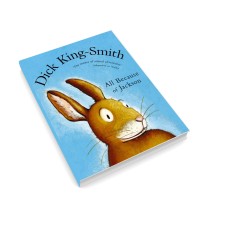
Dick King-Smith writes wonderfully imaginative animal adventures, his best-known being Babe, the Gallant Pig. A shorter but equally entertaining read is All Because of Jackson, a tale about a rabbit who longs to sail around the world.
Jill Tomlinson is the author of The Owl Who Was Not Afraid of the Dark and other stories from her Favourite Animal Tales series. I admire Tomlinson for writing animal tales that have their own distinct flavour and do not follow any formula.
For beautiful stories about resilience and embracing life, Swedish duo Rose Lagercrantz and Eva Eriksson have written and illustrated a series about a little girl named Dani, beginning with the first book, My Happy Life.
Cynthia Rylant's Cobble Street Cousins series is perfect for children who are most likely to grow up loving gentle fare such as Louisa May Alcott's Little Women.
Children who couldn't get enough of Mo Willems' Elephant and Piggiebooks when they were in kindergarten will happily transition to Judith Viorst's Lulu series. Flouting convention, the author speaks directly to the reader in side-splitting "time-outs" between chapters. Similarly, Kate DiCamillo's Bink and Gollie series will induce guffaws from readers who can keep up with the advanced vocabulary contained in the brief but witty text.
Parents who still have lingering worries that their children will be missing out on "the classics" simply must remind themselves that children have their whole lives to read Harper Lee and Charles Dickens, but now is their only time to enjoy Dick King-Smith or Kate DiCamillo.


Annie Ho is board chairwoman of Bring Me a Book Hong Kong bringmeabook.org.hk a non-profit promoting family literacy


Tuesday, July 1, 2014

Book Series for Beginning Readers

Between the lines: The joy of book series

PUBLISHED : Tuesday, 01 July, 2014, 9:41am
UPDATED : Tuesday, 01 July, 2014, 9:41am


I am an advocate for parent-child reading, so my children are in the habit of bringing books to grown-ups for them to read out loud. In the past year, my eldest daughter has started to take books from our bookshelf and read the words silently to herself.
And then one day, I heard her reading Maurice Sendak's One Was Johnny to her younger sister. The sight warmed my heart: she held her sister on her little lap the same way I hold them when I read to them. Only then did I discover that she reads quite well on her own.
Her strong reading skills make school life a little easier. For example, rather than trying to memorise the letters comprising a vocabulary word, she is aware of words that don't quite look right when spelled incorrectly. Solving maths questions don't confuse her because she is able to pick out the needed hints to determine what is required.
To prepare her for Grade One in September, our reading strategy has evolved into book series. I will read aloud the first chapter, to introduce the characters and give them life through animated reading using different voices. Then I leave the rest of the chapters and other books in the series for my daughter to read at her leisure. Book series are helpful tools for developing literacy skills because they often use repeated vocabulary words.
My daughter has happily graduated from Mo Willems' Elephant & Piggieseries of short, repetitive sentences accompanied by wildly funny illustrations. I have devoted so much column space to Willems in the past few years, that I have nothing to add except: if you have a child between the ages of three and six, you must pick up any one of the almost two dozen books in the series. These are exponentially more enjoyable than "The cat sits on a mat" types of first readers' books.
For beginning readers, reading well is more important than reading extensively. This summer, I hope my daughter will read over and over the two series that we are enjoying.
E.H. Minarik's Little Bear series has happy pastoral stories with illustrations by Maurice Sendak. The first four books in the series each contain four short stories. Although each is a self-contained tale, there is continuity in that a later story may make reference to an event from an earlier story. The fifth and final book, published a decade after the earlier books, is one short finale about how a kiss for Little Bear results in the marriage of two skunks.
The book set which I have is the bilingual edition from Taiwan publisher Hsin Yi. The illustrations are accompanied by Chinese text, with the original English at the back of each book. Each book also comes with a bilingual CD.
Available from the same publisher in the same format is the equally pastoralFrog and Toad series by Arnold Lobel. While the Little Bear stories encompass a wide variety of family and friends, Frog and Toad stories centre on the friendship of the two main characters, with a larger dose of humour. Frog and Toad embark on a number of adventures that are silly and delightful.
Both Little Bear and Frog and Toad are quality children's picture books that also happen to serve as appropriate material for beginning readers. This is different from books made specifically for new readers. Books for new readers generally use large fonts to display sight words, and they tend to be created by educators rather than authors and illustrators.
The above two series also expose readers to different forms of writing as natural enhancements of the stories. For example, in Your Friend, Little Bear, when Little Bear writes a letter to his new friend Emily, readers can become better acquainted with letter-writing, with its specific punctuation and indentation. In A List, a Frog and Toad book, the first illustration in the story shows Toad's "list of things to do today". As the story progresses, the text of the story presents handwritten words that are crossed out, in order to show completed tasks.
The aim with book series such as Little Bear and Frog and Toad is that by the end of summer, my daughter will confidently master this familiar material. This will give her a better foundation than hesitantly muddling through dozens of chapter books that are only read once.
Annie Ho is board chairwoman of the non-profit organisation Bring Me a Book Hong Kong bringmeabook.org.hk dedicated to improving children's literacy by reading aloud to them