Tuesday, October 20, 2015

Feng Zikai Book Award Winners

How high-quality picture books can encourage kids to read more

PUBLISHED : Tuesday, 20 October, 2015, 4:00am
UPDATED : Tuesday, 20 October, 2015, 4:00am


Annie Ho life@scmp.com


High-quality children's picture books are the building blocks to a lifelong love of reading. When I disparage commercial products in book form that are based on cartoon characters, my friends protest, insisting their children love storybook versions of their favourite animated TV series.
I counter that recognising and enjoying stories about familiar television characters is not the same as filling one's mind with the artful words and drawings of quality picture books. The difference is that children who are fed a diet of Peppa Pig and Henry Hugglemonster may one day no longer want reading time when they outgrow these characters.
What will keep children wanting to read more are stories that evoke emotions ranging from sheer joy to profound sadness, from belly-aching laughter to fear.
Max, the boy with the furry wolf suit in Where the Wild Things Are, may be just as recognisable as any cartoon character, but this picture book will be etched in the memories of every child who has come across it because of Maurice Sendak's choice narrative, flawless wording and visceral illustrations.
When children are exposed to quality picture books, they will inhale the rich language and complex themes, they will increase their understanding of the world around them, and their lives will be enriched as a result. They will progress from Ludwig Bemelmans' Madeline to Philip Stead's A Sick Day for Amos McGee. Thereafter, when they become independent readers, they will be able to enjoy Charlotte's Web as well as Captain Underpants.
Children's picture books in the English language have a long and revered history, but this is not the case for Chinese-language ones. Thus, the Feng Zikai Chinese Children's Picture Book Award was formed, in order to promote them in the Chinese language and encourage authors, illustrators and publishers to create quality picture books. The award has two components: a biennial award for the best Chinese publications, and an accompanying conference and forum to share and enhance knowledge and understanding of Chinese children's picture books.
The winner of the 4th Feng Zikai Chinese Children's Picture Book Award is Kata Kata Kata, written and illustrated by Bei Lynn. It is joined by four honour books. Interestingly, although all five books have different styles and storylines, I would describe them all as "poignant", touching upon the themes of love and longing. While some of the stories have amusing moments, their humour is approached with tenderness rather than comicality.
Next month, these winning authors and illustrators will be feted at an award ceremony, which will be followed by a two-day forum. The theme of the forum is "Just For Fun! - Humour in Picture Books", and the keynote speaker will be award-winning author and illustrator Jon Klassen.
I cannot think of anyone in a better position to speak about humour than Klassen, whose picture books have been described as subversive and "charmingly wicked". This is Not My Hat won Klassen both the Caldecott Medal in the US and the Kate Greenaway Medal in Great Britain, and he is the first person to win both awards for the same work.
Klassen will be in Hong Kong for an author talk and book signing on November 19. Registration and details at bringmeabook.org.hk For a complete list of Feng Zikai award-winning titles, visit fengzikaibookaward.org
Annie Ho is board chairwoman of Bring Me A Book Hong Kong

Tuesday, September 22, 2015

Perspective

How to teach difference between words and thoughts (Inside Out helps)

PUBLISHED : Tuesday, 22 September, 2015, 4:02am
UPDATED : Tuesday, 22 September, 2015, 4:02am


Animated feature films have come a long way since Walt Disney's 1937 Snow White and the Seven Dwarfs. For films in the past two decades, the technical advances of animation are rivalled only by the increasing depth of storytelling.
Like many children and parents in Hong Kong and abroad, our family recently watched and loved the movie Inside Out. The plot is centred on an 11-year-old girl's move to a new city and school, and contains plenty of entertaining flashbacks. However, her anthropomorphic emotions are the stars of the show, and they are created with colours that sensibly match each of them well: red for Anger, green for Disgust, blue for Sadness, purple for Fear and yellow for Joy.
Despite Inside Out being my five-year-old daughter's second-ever movie experience, she managed to follow the storyline and even gain a better understanding of it than I expected. I was amused to hear her refer to the film when my elder one got testy about something. My daughter observed her big sister's bad temper and stated, "Oh, she's letting Anger take control at the front." Ironically, her big sister's takeaway from the film was apparently more superficial. For the past month, the only time she mentioned the film was when she asked to be dragged around our home by her ankles, just as Joy dragged around Sadness in the film.
This film is an ingenious way to help children learn that what one says is not necessarily a literal expression of what one is thinking or feeling, including they themselves. Understanding others' intentions, and feeling compassion and empathy for others as a result of such understanding, are both big milestones in a child's emotional development.
After seeing Inside Out, I couldn't help but compare it with Orit Gidali's picture book Nora the Mind Reader. A wonderfully inventive story that explains the nuances of communication to younger schoolchildren, it is translated from Gidali's original Hebrew, and is complemented by delightful mixed-media-collage illustrations.

When Nora comes home from school in an unhappy mood because a boy has called her "flamingo legs", her mother gives her a magic wand. Shaped like a bubble-blowing stick, the wand enables Nora to read people's minds when she peers through its circles. Nora takes the wand to school and begins to witness how thoughts and words can sometimes be very different.
For children in middle school to be aware of different perspectives, Rob Buyea tells an inspiring story with different narrators in Because of Mr Terupt. The new school year begins with the arrival of a new teacher, Mr Terupt. Seven of the fifth-graders in his class take turns narrating the story about this teacher's special ability to grasp the intentions behind these students' words and actions. These seven children have different backgrounds and distinct voices, which lend themselves to original storytelling when the plot thickens.
Stories help us learn about other people's lives. The bonus that comes with great children's literature is that such stories provide evocative language, vocabulary and descriptions, which we can then use when we want to express what is inside our head. When we convey our intentions and verbalise our thoughts in a clear and concise way, people who hear what we say or read what we write will understand us without confusion or frustration on either end. Ultimately, that's what most of us want from life: to be understood by others, and to make connections with others.
Annie Ho is board chair of Bring Me a Book Hong Kong bringmeabook.org.hk a non-profit organisation advocating family literacy


Tuesday, August 25, 2015

Transitional Readers

YOUNG READERS CAN WAIT FOR CLASSICS

Parents make a mistake by giving their children classic books to read when they are too young to deal with the subject matter
PUBLISHED : Monday, 24 August, 2015, 10:27pm
UPDATED : Monday, 24 August, 2015, 10:27pm


Harper Lee's Go Set a Watchman has been flying off the shelves of bookshops and libraries around the world, and I wonder whether the copies being sold in Hong Kong should include a label to say that it is not suitable for children under 12. You may think that I'm being facetious, but I have seen a first-grader reading Lee's first book, To Kill a Mockingbird. Clearly not a book he chose for himself, it turned out his parents had encouraged him to read the work because "it is a classic". Had they read the book themselves (which they hadn't), these parents would understand that a story centred on a rape trial is highly inappropriate material for young children, regardless of how strong an independent reader he is.
Our fixation on introducing children to "classics" at a young age may just be another manifestation of hyper-parenting and the need to give children a head start on things including phonics at age two to violin at age three. Or perhaps we've overlooked the value of reading classic literature and are merely focused on "ticking the box" in the same way that we spend our family holiday in California trying to visit as many theme parks as possible.
Children in early primary years are just beginning to appreciate the power of the written language. Now that they are capable of reading for content, it's time to excite them with wondrous words and sentences that help them grasp intentions, moods and context. When reading on their own, children at this stage have progressed beyond Dr Seuss, but are not quite ready for E.B. White and Roald Dahl.
There are some good publications available for transitional readers, the industry's term for children who are graduating from beginning readers to chapter books. They include Passport to Reading, which publishes Ling & Ting, Grace Lin's droll series about a pair of twins; Green Light Readers, which publishes Tim Egan's wacky Dodsworthseries; and Walker Stories, which publishes Mary Murphy's lovely Parrot Parkseries.
My only gripe with the above books is that, although well-written and enjoyable, they are not stories that children are inclined to read more than once. Here is a selection of stories for first- and second-graders that - like those stories from classic literature - can be savoured, remembered and revisited.
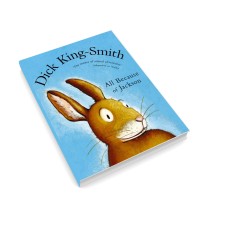
Dick King-Smith writes wonderfully imaginative animal adventures, his best-known being Babe, the Gallant Pig. A shorter but equally entertaining read is All Because of Jackson, a tale about a rabbit who longs to sail around the world.
Jill Tomlinson is the author of The Owl Who Was Not Afraid of the Dark and other stories from her Favourite Animal Tales series. I admire Tomlinson for writing animal tales that have their own distinct flavour and do not follow any formula.
For beautiful stories about resilience and embracing life, Swedish duo Rose Lagercrantz and Eva Eriksson have written and illustrated a series about a little girl named Dani, beginning with the first book, My Happy Life.
Cynthia Rylant's Cobble Street Cousins series is perfect for children who are most likely to grow up loving gentle fare such as Louisa May Alcott's Little Women.
Children who couldn't get enough of Mo Willems' Elephant and Piggiebooks when they were in kindergarten will happily transition to Judith Viorst's Lulu series. Flouting convention, the author speaks directly to the reader in side-splitting "time-outs" between chapters. Similarly, Kate DiCamillo's Bink and Gollie series will induce guffaws from readers who can keep up with the advanced vocabulary contained in the brief but witty text.
Parents who still have lingering worries that their children will be missing out on "the classics" simply must remind themselves that children have their whole lives to read Harper Lee and Charles Dickens, but now is their only time to enjoy Dick King-Smith or Kate DiCamillo.


Annie Ho is board chairwoman of Bring Me a Book Hong Kong bringmeabook.org.hk a non-profit promoting family literacy